





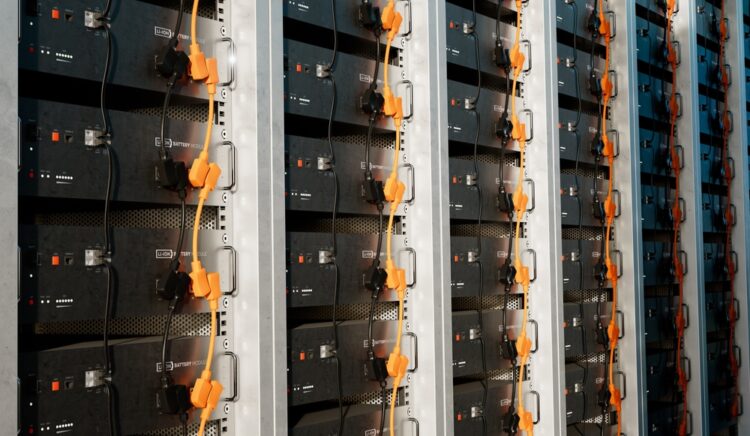
Changing Energy Needs and the Shift to Modular Systems
Energy storage technologies have evolved from being a simple component selection into a discipline of scalable system design and energy management. Solar energy systems (SES), industrial facilities, data centers, and mobile living solutions are now turning toward flexible solutions that can grow according to need, rather than fixed capacities. In line with this, modular battery systems are the most critical building block of modern energy infrastructures.
Traditional fixed-capacity batteries fall short in the face of energy needs that increase over time (growth of businesses, increase in the number of devices, etc.) and expanding them later is quite costly. Modular structures, on the other hand, fully adapt to the logic of “today’s needs + future growth”.
What Is a Modular Battery System?
Modular battery systems are intelligent energy storage solutions in which standard battery blocks operating independently of each other function in full synchronization under integrated management software. Shaped according to the dynamic energy needs of businesses and individual users, this technology allows for the instantaneous scaling of capacity simply by adding or removing new modules, without the need to change the infrastructure.
This flexible architecture frees energy infrastructures from static and limiting capacity barriers. Today, LiFePO₄ (Lithium Iron Phosphate) based modular systems offering high efficiency, superior safety standards, and long cycle life are accepted as the industry standard in future-compatible energy management.
Key Corporate Advantages:
- Scalable Investment: You can start with as much capacity as you need and expand your system in parallel with future growth.
- Uninterrupted Operation: In the event of a possible module failure, the relevant block is isolated without needing to shut down the entire system, and energy flow continues uninterrupted.
- Maximum Performance: Thanks to intelligent BMS control, the load is balanced evenly among modules, which minimizes heating and extends system lifespan.
What Is Scalable Energy and Why Is It Important?
Scalable energy is the ability of a storage system to expand according to changing demands without needing to alter the existing infrastructure and main components. Today, where dynamic consumption profiles dominate, energy needs do not remain static; they grow and evolve over time.
For example, a caravan user adding an air conditioner or refrigerator to their system over time, or an industrial facility increasing its production capacity, directly creates an additional energy requirement. Modular battery systems offer the most rational solution to these variable demands. Instead of incurring the cost of renewing the entire infrastructure, you can increase capacity in seconds and just as much as you need by simply integrating new battery modules into the system.
Corporate Benefits:
- CapEx Optimization: It eliminates the necessity of making excessively high-budget investments from the start for potential future growth projections.
- Sustainable Infrastructure: It provides gradual capacity increases with plug-and-play architecture without harming the existing system.
Advantages of Modular Battery Systems
Flexible Capacity Expansion and Financial Sustainability
The biggest financial advantage of modular systems is that they optimize the initial investment cost (CapEx). Users or businesses do not have to purchase huge capacities right from the start for a potential future scenario. A low-cost and optimum system can be established initially, and modules can be added step-by-step as the need arises. This situation makes budget planning more sustainable.
Easy Installation, Maintenance, and Uninterrupted Operation
Modular systems are manufactured with industrial-standard connection structures (especially rack-type designs in professional infrastructures). Thanks to this, installation processes are extremely fast and practical. In the event of a fault in critical applications, maintenance or replacement can be performed by disabling only the relevant module instead of shutting down the entire system. The system continues to operate without interrupting operations.
High Efficiency, Stable Performance, and Long Lifespan
Distributing the load evenly across multiple modules minimizes cell-based heating and directly extends system lifespan. The thousands of charge cycles and deep discharge capability offered by LiFePO₄ technology guarantee that each module exhibits high and equal performance for many years.
Where Are Modular Battery Systems Used?
Modular battery systems have a very wide area of use. They are particularly preferred in all areas where energy demand is variable.
The main areas of use are as follows:
- Solar energy systems (SES)
- Caravan and mobile living systems
- UPS uninterruptible power supplies
- Industrial energy storage systems
- Telecom infrastructures
- Data centers
- Smart building energy solutions
- Agricultural and irrigation systems
- Construction site and mobile energy stations
Because energy demand increases over time in these areas, the modular structure provides a major advantage.
| Sector / Application | Core Solution Provided |
| Solar Energy Systems (SES) | Stores excess energy produced during the day to provide scalable consumption at night or on cloudy days. |
| Industrial Facilities & Data Centers | Meets growing energy demand as production capacity increases, continuously protecting critical data. |
| Caravan & Mobile Life | Gives the freedom to expand the battery bank in limited spaces according to comfort appliances added over time. |
| Telecom & Infrastructure Stations | Offers easy maintenance and the flexibility to add modules as needed at base stations in remote locations. |
Why a LiFePO₄-Based Modular System?
- Simultaneous Aging: Thanks to high cycle life, new modules to be added in subsequent years work in highest compatibility with the existing system.
- Thermal Safety: Due to its chemical structure, the risk of thermal runaway is minimal; it is the safest alternative for indoor installations.
- Uninterrupted High Power: It causes no voltage loss even in deep discharges, offering stable energy output.
What Should Be Considered When Choosing a Modular System?
When choosing a modular battery system, not only capacity but also system compatibility is important. Modules must work compatibly with each other, use the same BMS infrastructure, and have a similar chemical structure.
Additionally, when planning future expansion, it is important that the system is designed accordingly. Otherwise, incompatibility issues may arise in the future process.
A high-quality modular system should both meet today’s needs and remain open to future growth.