


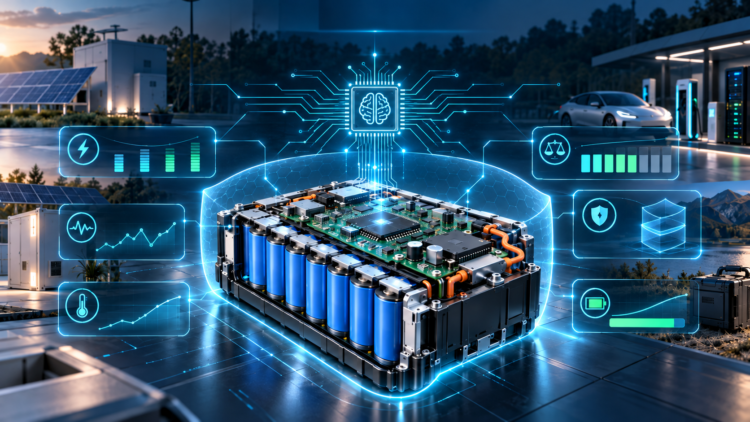
The Manufacturing Process at the Heart of Energy Storage Technology
Battery technologies have become one of the key components of modern energy infrastructure. Used across a broad range of applications, from electric vehicles and solar energy systems to caravan applications and industrial UPS systems, batteries are not merely products that store energy; they are advanced energy systems in which multiple engineering disciplines come together.
Therefore, battery manufacturing processes require many different fields, including chemistry, electronics, mechanical design, software, and automation, to work together. Starting with the manufacture or sourcing of cells and continuing through battery pack assembly, BMS integration, and quality control processes, every stage has a direct impact on the safety, performance, and service life of the final product.
Especially with the increasing adoption of LiFePO₄ battery technology in energy storage applications, the importance of safe, controlled, and standardized manufacturing processes has grown further.
Growing demand for energy storage solutions in Türkiye and around the world has also increased interest in battery manufacturing technologies. Today, the objective is not merely to manufacture a battery, but to develop energy storage systems that are reliable, long-lasting, efficient, and suitable for their intended use.
What Is Battery Manufacturing?
Battery manufacturing is the process of producing cells or sourcing cells with suitable specifications, electrically and mechanically assembling them, and integrating them with the BMS and other system components to create a usable energy storage system.
This process is not limited to simply bringing cells together or performing physical assembly. At every stage of production, multiple criteria, including electrical safety, mechanical durability, thermal management, performance, and quality control, must be evaluated together.
A battery system essentially consists of three main structures:
- Cells
- Electronic control system (BMS)
- Mechanical packaging (Battery Pack)
In more comprehensive systems, additional elements such as fuses, contactors, current sensors, communication infrastructure, and thermal management components may also be included alongside these core structures.
When these components are designed and assembled to operate compatibly with one another, a safe, efficient, and long-lasting energy storage system is created.
Cell Manufacturing: The Starting Point of Energy
One of the most important stages in the battery manufacturing process is cell manufacturing. Cells are the basic units that store energy within the battery. In lithium-ion cells, the primary components include the anode, cathode, electrolyte, and separator.
In cell manufacturing, electrode materials are first combined in specific proportions to prepare a suitable mixture. This mixture is coated onto metal foils and dried under controlled conditions. The electrodes are then processed to achieve the appropriate thickness and density, after which they are cut or slit to the required dimensions.
At the next stage, the anode, cathode, and separator are wound or stacked in layers depending on the cell design. Cell assembly is completed by filling the electrolyte and sealing the cell.
Even small changes in process conditions during cell manufacturing can affect cell performance and reliability. Therefore, especially during critical stages such as electrolyte filling and cell assembly, humidity, particle levels, temperature, and other environmental conditions are managed in controlled production environments.
Formation Process and Activation
After cell manufacturing and assembly are completed, an important process known as “formation” is carried out. At this stage, the cells are charged and discharged in a controlled manner according to specified parameters.
The formation process plays an important role in electrochemically stabilizing the cell. During this stage, the electrochemical structures required during operation are formed within the cell and stabilized.
Formation conditions may vary depending on cell chemistry, cell design, and the technical parameters specified by the manufacturer. This process contributes significantly to determining the cell’s capacity, efficiency, and cycle performance.
Improper management of the formation process can adversely affect cell performance and long-term reliability. For this reason, formation is one of the stages of cell manufacturing that must be carefully controlled.
Cell Selection and Grading
Cells produced in manufacturing are tested and classified according to various electrical and physical characteristics. Cells with similar capacity, open-circuit voltage, and internal resistance values are grouped within specified tolerance ranges.
This process is referred to as “cell grading” and is one of the key stages in battery pack assembly. Using cells with significant differences in their characteristics within the same pack can cause the cells to behave differently over time and may lead to unbalanced system performance.
For this reason, in modern battery manufacturing processes, it is highly important to match cells within appropriate tolerance ranges and ensure traceability by recording production data.
Battery Pack Assembly
Once cell testing and grading are complete, the battery pack assembly process begins. At this stage, cells are connected in series and parallel to create a battery pack that meets the target nominal voltage and capacity values.
For example, connecting four 3.2 V nominal LiFePO₄ cells in series creates an approximately 12.8 V nominal pack, while connecting 16 cells in series provides an approximately 51.2 V nominal voltage. Depending on the application, these systems may be referred to in the market as “12 V” or “48 V class” systems.
Battery pack assembly is not limited to making electrical connections. Mechanical securing of the cells, electrical insulation, safety of connection points, placement of fuses and protection elements, thermal management, and maintenance requirements are also evaluated at this stage.
BMS Integration: The Brain of the Battery
One of the key components of modern battery systems is the BMS, or Battery Management System. A BMS is an electronic control system that monitors cell and system parameters to ensure the battery operates safely and in a controlled manner.
With a BMS:
- Cell voltages are monitored.
- Cell balancing is performed in appropriate designs.
- Protection is provided against overcharge conditions.
- Protection is applied against over-discharge.
- Cell and system temperatures are monitored.
- Charge and discharge currents are monitored and limited when necessary.
- Protection mechanisms can be activated in situations such as short circuits and overcurrent.
- In suitable systems, battery data can be transmitted to external systems via CAN, RS485, or similar communication protocols.
Especially in multi-cell LiFePO₄ battery packs, the BMS is a critical safety and management component for monitoring, protecting, and, where supported by the design, balancing the cells.
Mechanical Design and Enclosure Manufacturing
After the electrical and electronic structure of the battery pack is completed, the mechanical protection stage begins. The cells and electronic components are placed inside a durable enclosure or housing designed for the intended operating conditions.
Depending on the application, enclosure design is planned to provide the necessary protection against external factors such as impact, vibration, dust, moisture, and temperature changes. In industrial energy storage applications in particular, rack-type structures and modular cabinet solutions may be preferred.
Mechanical design is also important for thermal management. Cell placement, airflow, heat-transfer paths, and cooling solutions used when necessary help control the battery’s operating temperature.
A properly designed enclosure and thermal management architecture contribute to more stable, safe, and efficient battery operation.
Testing and Quality Control Processes
After battery production is completed, the product undergoes various tests depending on its design specifications and the applicable technical standards. These tests help verify the battery’s electrical performance, safety features, and suitability for its intended operating conditions.
The main tests include:
- Capacity test
- Charge and discharge performance test
- Load test
- BMS function test
- Cell-to-cell voltage difference check
- Insulation resistance test
- Thermal tests
- Safety tests such as overcurrent and short-circuit testing
- Cycle-life test
- Leak-tightness test for applicable products
The scope of testing may vary depending on cell chemistry, battery design, application, and the relevant technical standards.
This stage is critical for verifying production quality and assessing whether the product meets the specified performance and safety requirements.
Impact of LiFePO₄ Technology on Manufacturing Processes
LiFePO₄, or lithium iron phosphate, is one of the important cathode chemistries used in lithium-ion batteries. One of the distinguishing characteristics of this chemistry is its high thermal and chemical stability compared with some other lithium-ion chemistries.
This characteristic can provide important safety advantages, particularly under conditions such as thermal runaway and overcharge. However, LiFePO₄ cells also require proper manufacturing, appropriate charge-discharge management, correct BMS design, and suitable system integration.
The prominent characteristics of LiFePO₄ technology include long cycle life, high thermal stability, and suitability for energy storage applications. However, properties such as energy density may differ from those of other lithium-ion chemistries.
Because of these characteristics, LiFePO₄ is one of the battery chemistries widely used in stationary energy storage applications where safety, cycle life, and cost are important considerations.
Automation and Modern Manufacturing Technologies
Today, the use of automation systems is becoming increasingly widespread, particularly in high-volume battery cell and pack manufacturing facilities. Robotic production lines, automated measurement systems, data-collection infrastructure, and digital traceability solutions have become important components of modern manufacturing processes.
In some modern production facilities, machine vision, machine learning, and AI-assisted quality control methods are also used. These technologies enable more precise monitoring of production parameters, early detection of potential defects, and standardization of manufacturing processes.
Digitally recording data generated at each production stage provides significant advantages in cell- or battery-level traceability, quality analysis, and continuous improvement of manufacturing processes.
In conclusion, modern battery manufacturing is a comprehensive engineering process in which many different disciplines, from cell chemistry and mechanical design to BMS software and automation, work together. Controlled management of every stage, from the cell to the final system, plays a fundamental role in developing safe, efficient, long-lasting energy storage systems that are suited to their intended use.