





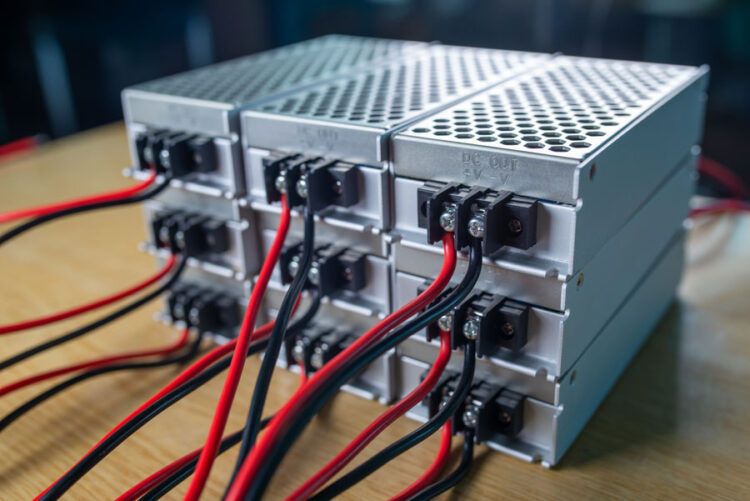
Rack-Mounted Solutions Becoming the Industrial Standard in Energy Storage
In recent years, energy storage technologies have undergone a major transformation not only in individual applications but also in professional and industrial uses. Solar power plants, data centers, telecommunications infrastructure, UPS systems, and industrial energy storage solutions now require more organized, modular, and scalable systems. Rack-mounted battery systems have emerged as one of the strongest responses to this need.
Rack-mounted battery configurations allow energy storage systems to be arranged systematically within standard cabinets. This provides significant advantages in terms of both installation convenience and system management. Especially in large-scale energy projects, rack-mounted battery systems have become one of the most preferred solutions due to benefits such as space efficiency, ease of maintenance, and scalability.
In Türkiye, interest in rack-mounted battery technology is also increasing rapidly, particularly with the growth of solar energy investments. Companies that install professional energy systems are increasingly turning to modular battery architectures for more stable and long-lasting solutions.
What Is a Rack-Mounted Battery?
A rack-mounted battery is an energy storage system consisting of modular battery units installed inside dedicated metal cabinets or rack systems. These systems are typically designed in accordance with the 19-inch rack cabinet standard and allow multiple battery modules to be positioned vertically or side by side.
This structure allows energy capacity to be increased easily according to demand. For example, a lower-capacity system can be installed initially, and additional battery modules can later be integrated as energy needs grow. This scalability is one of the most important advantages of rack-mounted battery systems.
Rack-mounted systems are commonly used with LiFePO₄ battery technology and stand out for their high efficiency, long service life, and safe operation. This configuration has become almost a standard, particularly in data centers and uninterruptible power supply applications.
Advantages of Rack-Mounted Battery Systems
Modular and Scalable Architecture
One of the greatest advantages of rack-mounted battery systems is their modular architecture. In these systems, each battery unit can operate independently, and new modules can be added to the system as needed.
This feature provides a major advantage for growing energy requirements. Businesses can initially install a smaller system to keep costs under control and then expand the system easily over time.
For this reason, rack-mounted battery systems are a highly suitable solution for businesses planning their energy infrastructure over the long term.
Organized and Compact Installation
In conventional battery systems, cabling and placement can often become complex. In rack-mounted battery systems, however, all modules are arranged systematically inside a standard cabinet.
This organized structure shortens installation time and simplifies maintenance. It is also much more practical for technical service teams to access and work on the system.
In addition, the compact structure makes it possible to achieve high energy capacity while using less space. This is a major advantage, especially in data centers and industrial facilities.
High Safety and Stable Operation
Safety is one of the most important criteria in energy storage systems. Rack-mounted battery systems typically operate with an advanced BMS (Battery Management System). The BMS continuously monitors conditions such as overcharging, over-discharging, short circuits, and temperature.
LiFePO₄-based rack-mounted battery solutions are particularly safe in terms of thermal stability. They can maintain stable operation even at elevated temperatures, helping minimize potential risks.
For this reason, rack-mounted battery systems are widely used in critical infrastructure, particularly in data centers and telecommunications stations.
Where Are Rack-Mounted Battery Systems Used?
Rack-mounted battery systems are used across a wide range of applications. They are particularly preferred in professional systems where uninterrupted energy supply is critical.
The main areas of application include:
• Data centers
• Telecommunications base stations
• UPS uninterruptible power systems
• Solar power plants (SPP) (For more information, please visit https://birikimpilleri.com/en/battery-selection-guide-for-solar-energy/
• Industrial energy storage systems
• Hospitals and critical infrastructure
• Factory energy backup systems
• Smart building energy solutions
Because energy continuity is critical in these applications, rack-mounted battery systems stand out as one of the most reliable solutions.
The Difference Between Rack-Mounted Batteries and Conventional Systems
Conventional battery systems often have a less organized installation structure, and management becomes more difficult as the system expands. Maintenance processes can also become longer and more complex.
In rack-mounted battery systems, the entire structure is standardized. As a result, both installation and maintenance processes become much faster and more efficient. In addition, the modular architecture allows system capacity to be increased easily.
From an energy-efficiency perspective, rack-mounted systems provide more stable voltage output and help minimize energy losses.
The Role of LiFePO₄ Technology in Rack-Mounted Systems
The majority of modern rack-mounted battery systems are built using LiFePO₄ battery technology. The main reason is that this technology offers long service life, high safety, and high efficiency.
LiFePO₄-based rack systems can withstand thousands of charge cycles and operate for many years with limited performance degradation. Their deep-discharge capability also allows a large proportion of the stored energy to be utilized.
These characteristics provide a significant advantage, especially for continuously operating energy systems. When combined with rack-mounted battery architecture, they create a highly robust and reliable energy infrastructure.
What Should Be Considered When Choosing a Rack-Mounted Battery?
When selecting a rack-mounted battery, not only capacity but also system compatibility and quality should be considered. BMS quality, cell technology, and cooling architecture are particularly important criteria.
The intended application area should also be analyzed correctly. Data centers may require higher safety standards, while higher cycle life may be more important in solar energy systems.
Without proper planning, the system may operate inefficiently or experience performance degradation sooner than expected.
For more details, please visit https://birikimpilleri.com/en/solution/battery-engineering/